


Secret: when I was in high school, I was going to grow up to be a high school English teacher and writer. I read voraciously. I wrote endlessly – journals, short stories, poems, and essays. I haven’t become a teacher yet, but I’ve kept my love of writing alive. I’ve been blogging – personally and professionally – for years and even co-authored a book this year!
To me, writing is an art form. I can only get better at it, but it will take time, and practice. I was discussing writing with Jeremiah (blog | twitter) one day, and he recommended I read William Zinsser’s On Writing Well The Classic Guide to Writing Nonfiction for inspiration.
I loved this book, and I’d recommend it to anyone who wants to make their writing better. It’s easy to read, entertaining, and really helpful.
This book is not about punctuation and grammar, but about themes and ideas. Zinsser stresses over and over that there is still an I in writing – especially in nonfiction. My biggest take-away is that it is OK for me to express my opinion – as long as I do it simply, clearly, and with conviction.
Writing well is not about putting words on a piece of paper (or typing them into Word) and publishing them. It is a painstaking process to craft careful sentences, rearrange them, put in a compelling introduction and successful end, rewrite, rewrite, and rewrite. Sometimes, I worry that I am a slow writer. I like to write multiple drafts of pieces. I worry about how sentences flow. I still have – and use – the paper thesaurus I bought in high school. After reading this book, I realize that’s OK.
I think the only way to do justice to this book is list my favorite quotes – and there are many.
On principles: “I often find myself reading with interest about a topic I never thought would interest me – some scientific quest, perhaps. What holds me is the enthusiasm of the writer for his field.”
On simplicity: “Clutter is the disease of American writing.”
“Simplify, simplify.”
On writing style: “Therefore I urge people to write in the first person: to use “I” and “me” and “we” and “us.” They put up a fight.
"Who am I to say what I think?" they ask, "Or what I feel?"
"Who are you not to say what you think?" I tell them. "There's only one you. Nobody else thinks or feels in exactly the same way."
“We have become a society fearful of revealing who we are.”
“Writing is an act of ego, and you might as well admit it. Use its energy to keep yourself going.”
On the audience: “You are writing for yourself.”
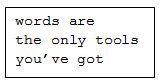
On words: “Remember that words are the only tools you’ve got.”
On methods: “You learn to write by writing.”
On unity: “Every successful piece of nonfiction should leave the reader with one provocative thought that he or she didn’t have before. Not two thoughts, or five – just one.”
On the lead and the ending: “The most important sentence in any article is the first one.” (Yes, this was the first sentence of the chapter.)
“Knowing when to end an article is far more important than most writers realize.”
On bits & pieces: “Use active verbs unless there is no comfortable way to get around using a passive verb.”
“Most adverbs are unnecessary.” 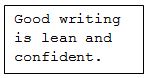
“Most adjectives are also unnecessary.”
“Don’t say you were a bit confused and sort of tired and a little depressed and somewhat annoyed. Be confused. Be tired. Be depressed. Be annoyed. Don’t hedge your prose with little timidities. Good writing is lean and confident.”
“There’s not much to be said about the period except that most writers don’t reach it soon enough.”
“Keep your paragraphs short.”
“Rewriting is the essence of writing well: it’s where the game is won or lost.”
“There’s no subject you don’t have permission to write about.”
On writing about people: “Get people talking. Learn to ask question that will elicit answers about what is most interesting or vivid in their lives.”
On humor: “Humor is the secret weapon of the nonfiction writer.”
On enjoyment, fear, and confidence: “Living is the trick. Writers who write interestingly tend to be men and women who keep themselves interested.”
I Will Write Better
This book made me more deliberate and conscientious writer. It also gave me the confidence to write for me. Anyone who wants to write, whether it be a book or a blog, will learn from this book!
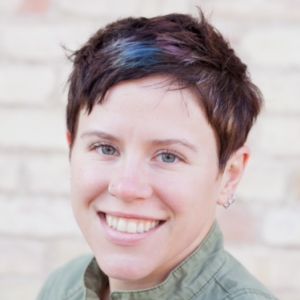 Jes Borland is a Premier Field Engineer - SQL Server for Microsoft, where she is a trusted technical adviser, deep technical support, and teacher for her customers. Her experience as a DBA, consultant, and 5-time Data Platform MVP allow her to help the business and the IT teams reach their goals. She has worked with SQL Server as a developer, report writer, DBA, and consultant. Her favorite topics are administration, automation, and performance. She frequently presents at user groups, SQL Saturdays, and other community events. She is also an avid runner and chef.